QUILL
Electrocorticography (ECoG) stimulation array - 128 channels
Project info
Thickness (μm)
10
Modality
Stimulation
Channel Count
128
Bending Radius (mm)
1
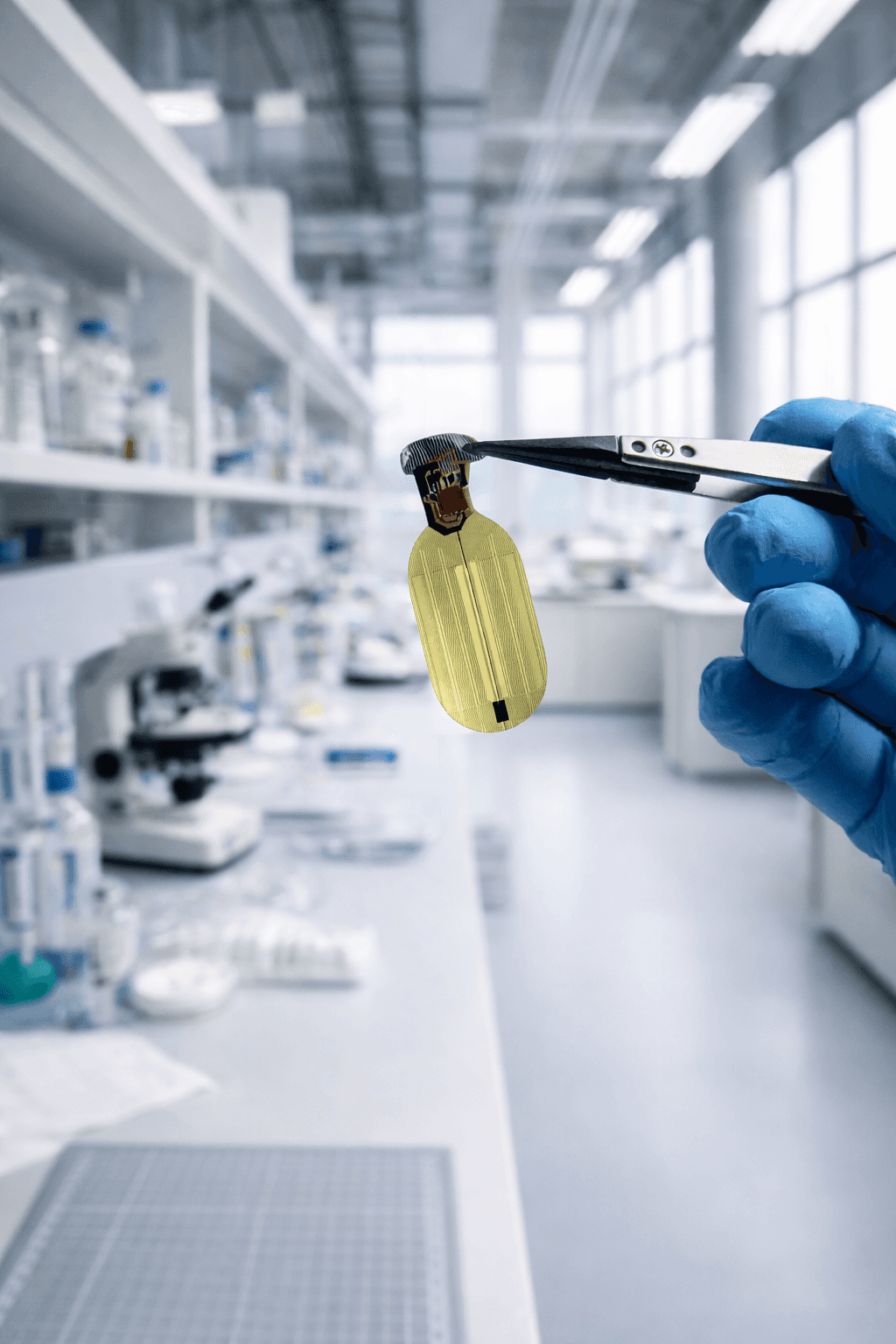
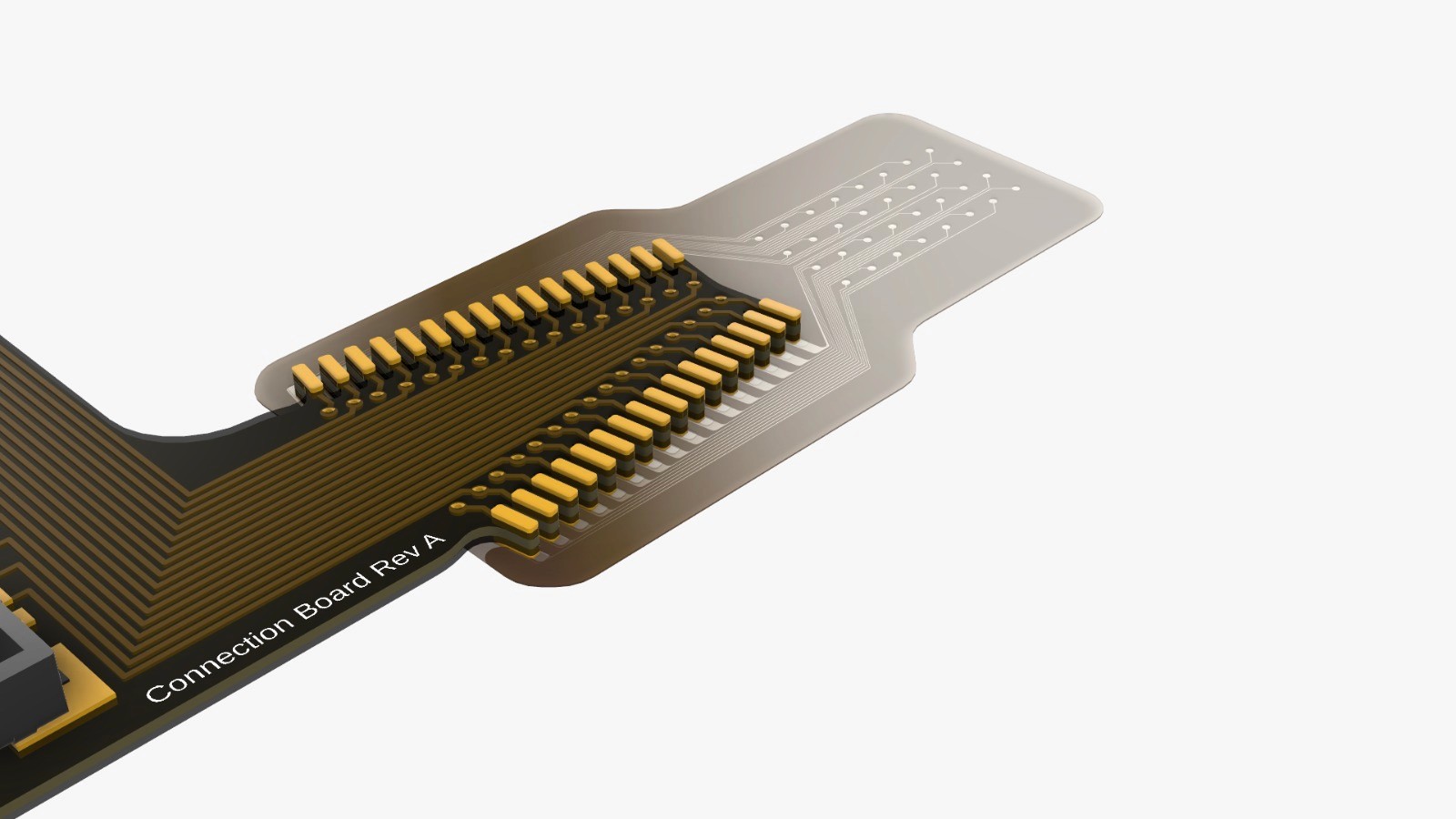
QUILL is a polymer-based Electrocorticography (ECoG) neural interface equipped with 128 channels for electrical stimulation from the surface of the brain with an average impedance of 0.9 kOhm. Available in various dimensions.
The details
This 128-channel biocompatible brain–computer interface is designed for high-resolution cortical stimulation and modulation in animal models or organoids within an ultra-compact footprint. The device enables spatially precise neuromodulation, supporting functional mapping, plasticity studies, and network-level interrogation.
Built on a soft, conformable substrate, the interface minimizes tissue strain while maintaining stable contact with the cortical surface. Electrode geometry and channel architecture are optimised to reduce electrical cross-talk during multi-site stimulation, ensuring controlled current delivery and spatial selectivity. Proprietary high-charge-injection surface coatings provide efficient and repeatable charge transfer within established safety limits.
An integrated stimulation-dedicated microelectronic architecture is positioned on the implant to deliver precise, programmable pulse trains across channels. To accommodate distributed stimulation circuitry and maintain channel isolation, recording capability is available in a limited configuration; amplification components are positioned further from the electrode sites compared to our recording-optimised platforms, resulting in lower signal-to-noise performance.
Integrated with BCI-ready electronics and software, the system supports programmable monopolar and bipolar stimulation paradigms, automated protocol execution, and synchronisation with external acquisition systems. It interfaces with our standard headstage via robust, standardised connectors and includes integrated anchoring wings for secure fixation to the skull using bone screws or bone cement, ensuring mechanical stability during chronic experiments. The platform is available in both cabled and wireless configurations to match acute or freely moving paradigms.
Not for human use.